what were the arguments in not giving women the right to vote?
100 Women: The female protesters confronting giving women the vote
By Amelia Butterly
100 Women
Paradigm source, Prof June Purvis
A century ago, after years of campaigning, women over the age of 30 who owned belongings were given the right to vote in the UK.
But for many thousands of women, it was non a moment of commemoration.
Known every bit the anti-suffrage move, these women had been working to oppose the suffragettes.
They believed women didn't have the chapters to understand politics, and portrayed the suffragettes as a grouping of "ugly" women and "spinsters".
Epitome source, The Women'southward Library at LSE
The Anti-Suffrage League was founded in 1908 by Mary Humphrey Ward, with support from two men: Lord Curzon and William Cremer.
A year afterwards, it was announced that more 250,000 people, both men and women, had signed a petition against giving women the vote.
Writing in The Queen in 1908, i "opponent", as they were described in the article, said they saw the campaign for the vote as a "prelude to a social revolution" that would set society back.
"We believe in the sectionalisation of functions as the keystone of civilization," the piece continued.
"Information technology is as if the animals on the farm should insist on changing places - the cows insist upon drawing the charabanc, while the horses strive in vain to chew the cud and ruminate."
Image source, Prof June Purvis
Historian Kathy Atherton says people present can notice information technology "surprising" that women were involved in an anti-suffrage motility, just that it's important to "put yourself in their shoes".
"There would have been a general acceptance that women were intellectually inferior and emotional - and women would have believed that besides equally men - so they didn't have the capacity to make political judgements," she says.
"It's a actually hierarchical society and the white male is at the elevation of the heap.
"There'southward a fear that yous're upsetting the natural order of things, fifty-fifty going so far as thinking the colonies would be affected if they felt that Britain was being ruled past women."
Image source, The Women's Library at LSE
"One of the arguments that some of these anti-suffrage campaigners put forward was that if we give British women the vote - and they would very specifically apply the example of India - Indian men and women won't similar it," says Dr Sumita Mukherjee from the University of Bristol.
At the time, Republic of india was ruled by the British Empire so ability was exerted past the regime in London and, past default, those who voted for them in the first place.
"They [the anti-suffrage movement] used this supposition that colonial subjects were very patriarchal themselves and they wouldn't like information technology if women had the vote in Great britain," says Dr Mukherjee.
"The counter-argument was that there had been a female queen, Queen Victoria. She'd been Empress of the British Empire and near subjects hadn't kicked up a fuss near having an empress so why would they kick up a fuss about British women having a vote?"
Image source, The Women's Library at LSE
There were also arguments much closer to home.
Historical author Elizabeth Crawford says there was a genuine business concern at the time that giving women the vote would "destroy families".
"They thought information technology would cause dissension in the home if a man wanted to vote conservative and his married woman liberal," she says.
The writer in The Queen magazine said the suffragettes were "irresponsible" in forcing the vote on wives and mothers.
"Information technology is a vast upheaval of social institutions and habits, which must cut into the peace and well-being of families and damage the education of children," the commodity claimed.
A leaflet from 1909 held in The Woman'due south Library puts forward an statement that women have "neither capacity nor leisure" to vote.
"Women are more than hands swayed by sentiment, less open to reason, less logical, keener in intuition, more sensitive than men," the writer claims.
"The qualities in which their minds excel are those to the lowest degree required in politics; their potent points are wasted or harmful at that place."
Image source, The Women'south Library at LSE
Both sides of the entrada produced artwork and slogans to promote their points of view.
"They [the anti-suffrage images] are portraying the suffragettes equally being absolute harridans, slovenly housewives, bloodcurdling mothers, that they were ugly, that they looked similar men, that they were lesbians," says Ms Atherton.
"Information technology's very much like the Twitter campaigns that you become at the moment, whenever a high-profile woman says something of a feminist nature."
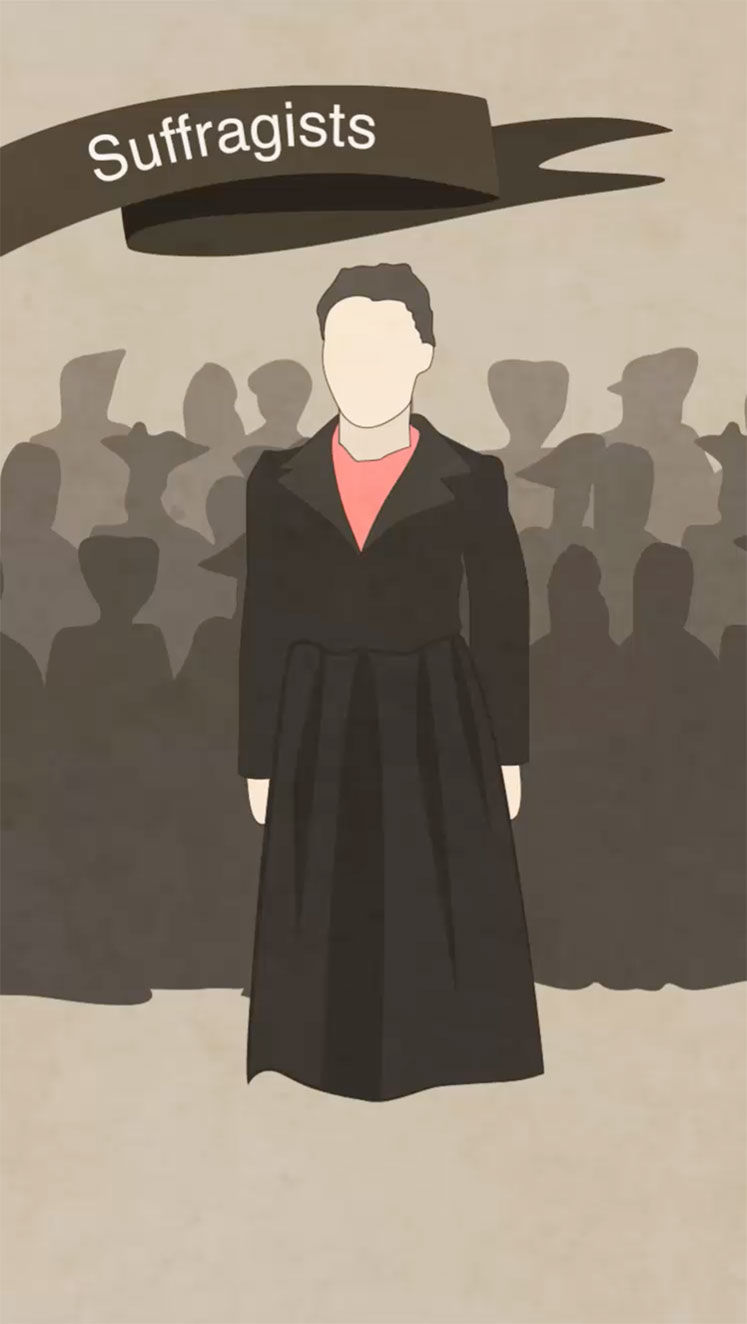
The Suffragists – were first to organise, forming local societies in the 1860s
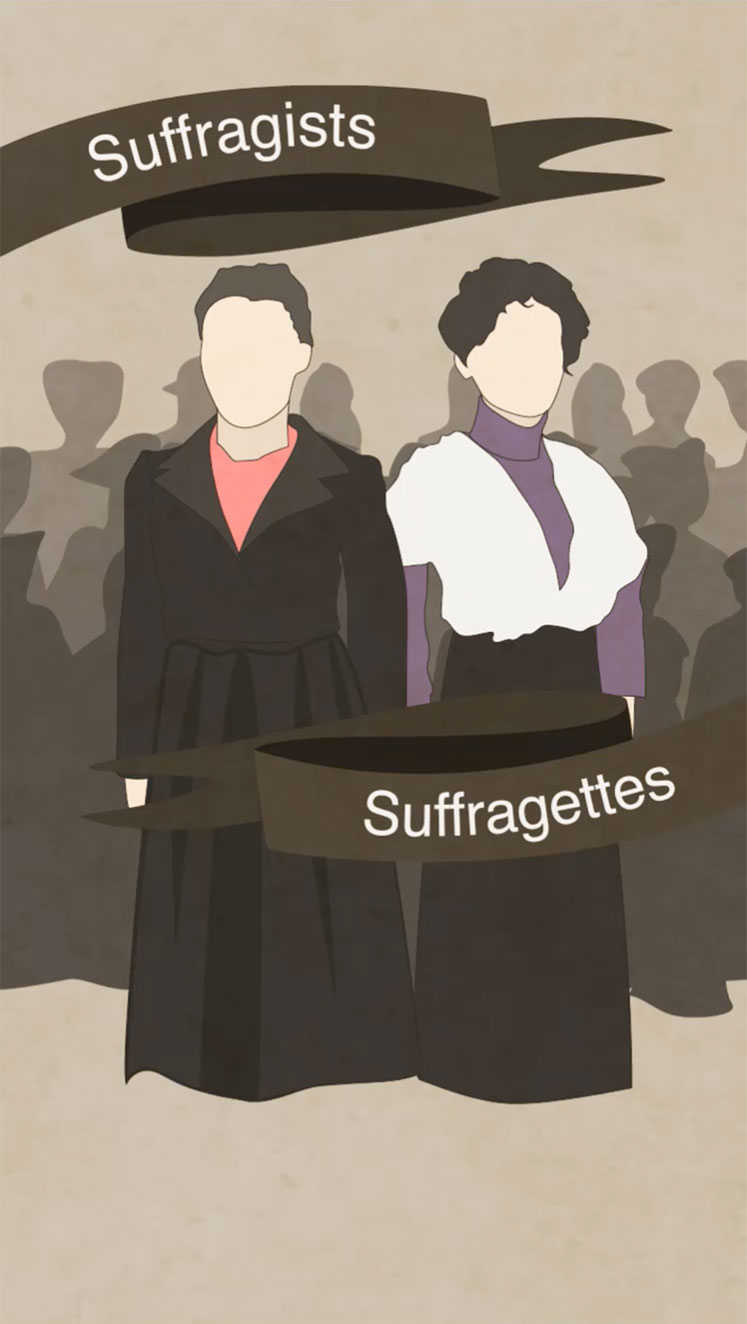
The Suffragettes – were active for just 10 years afterwards splitting from the Suffragists in 1903
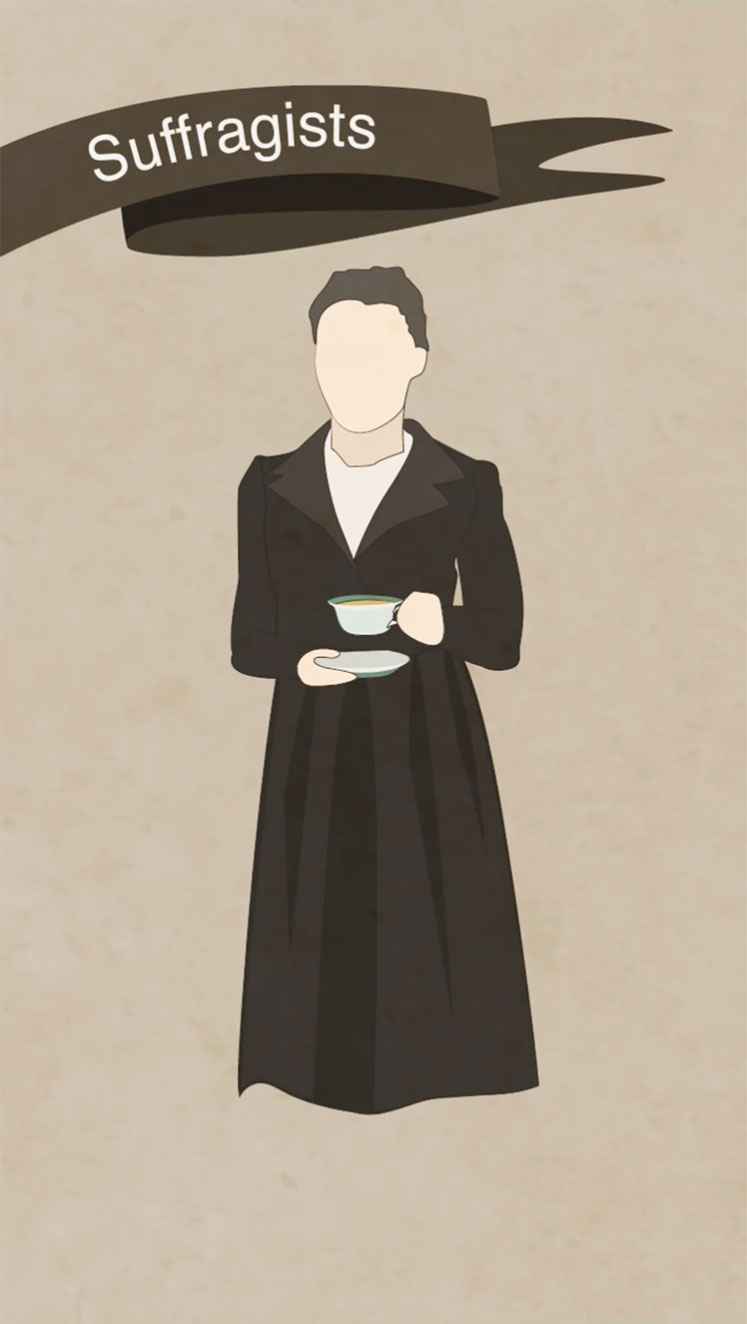
Suffragists – focused on middle-class women
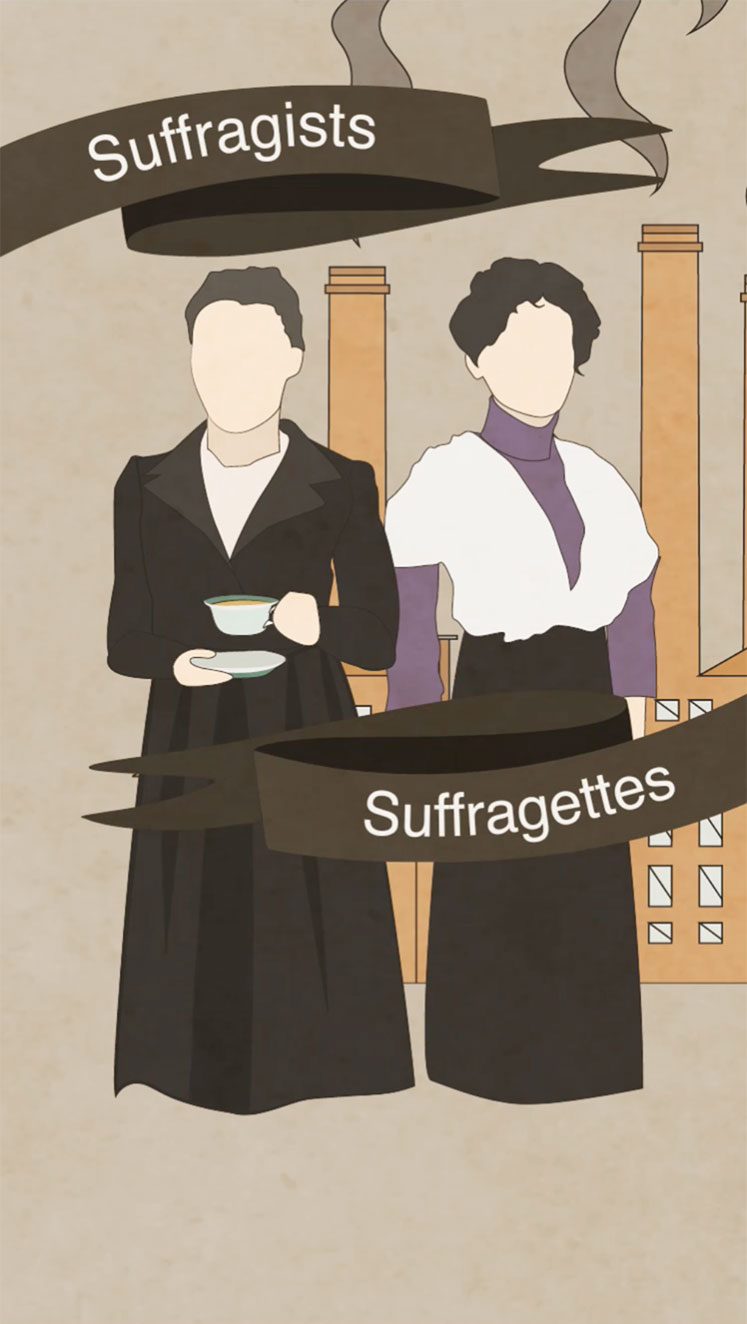
Suffragettes – encouraged working-class women to protest
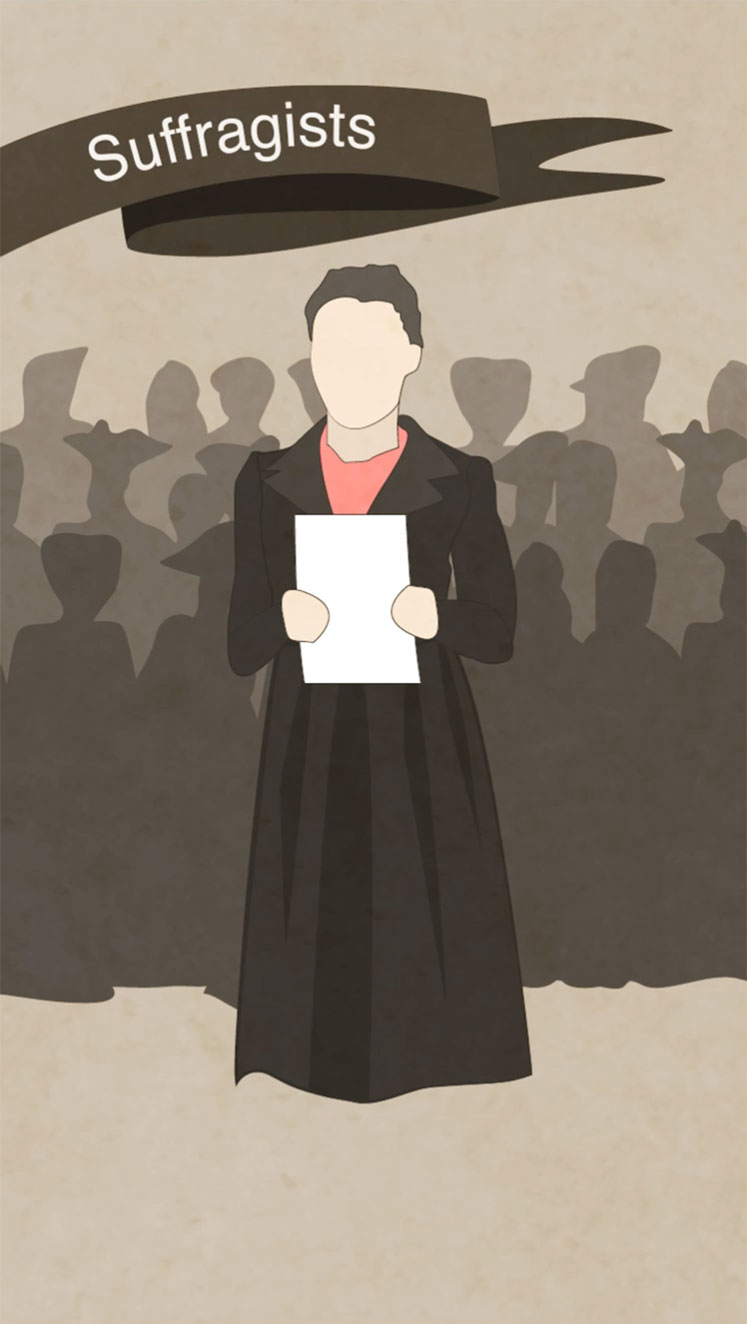
Suffragists – held public speaking events, lobbied MPs and wrote petitions
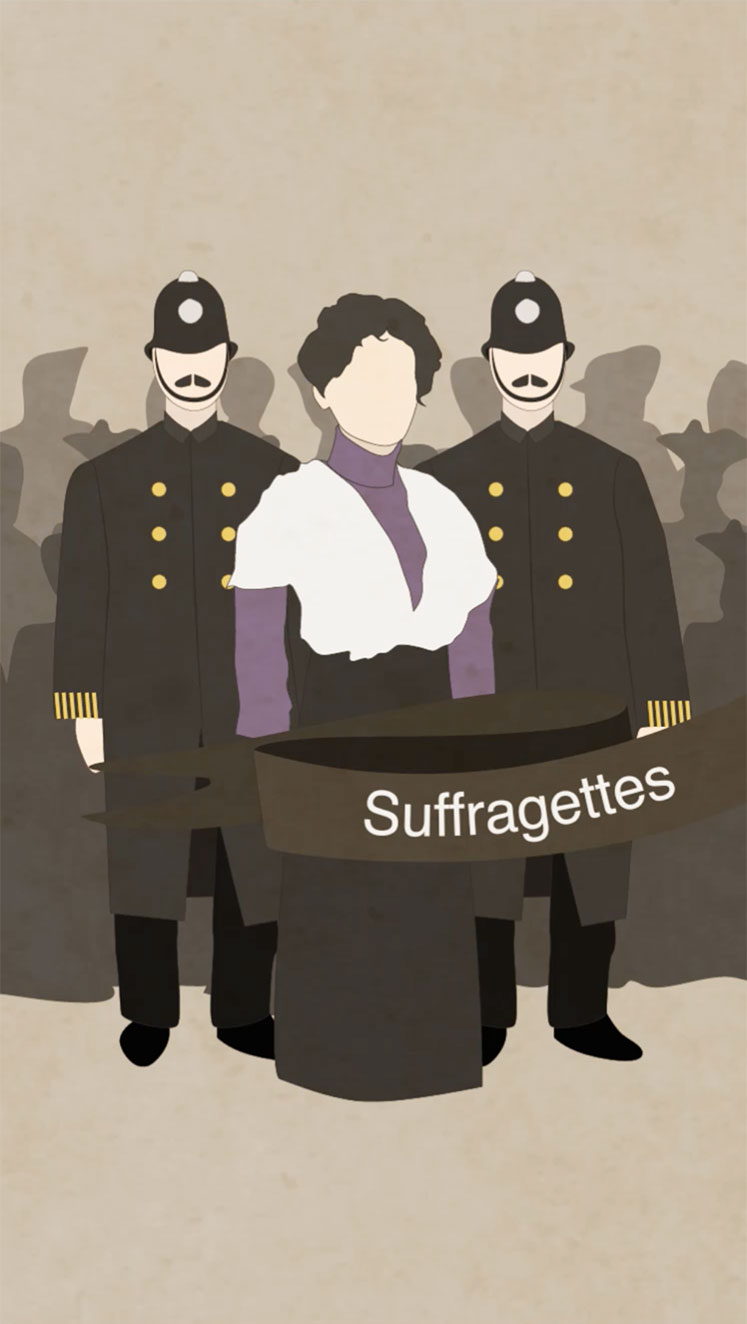
Suffragettes – disrupted meetings, vandalised art and buildings and were frequently arrested
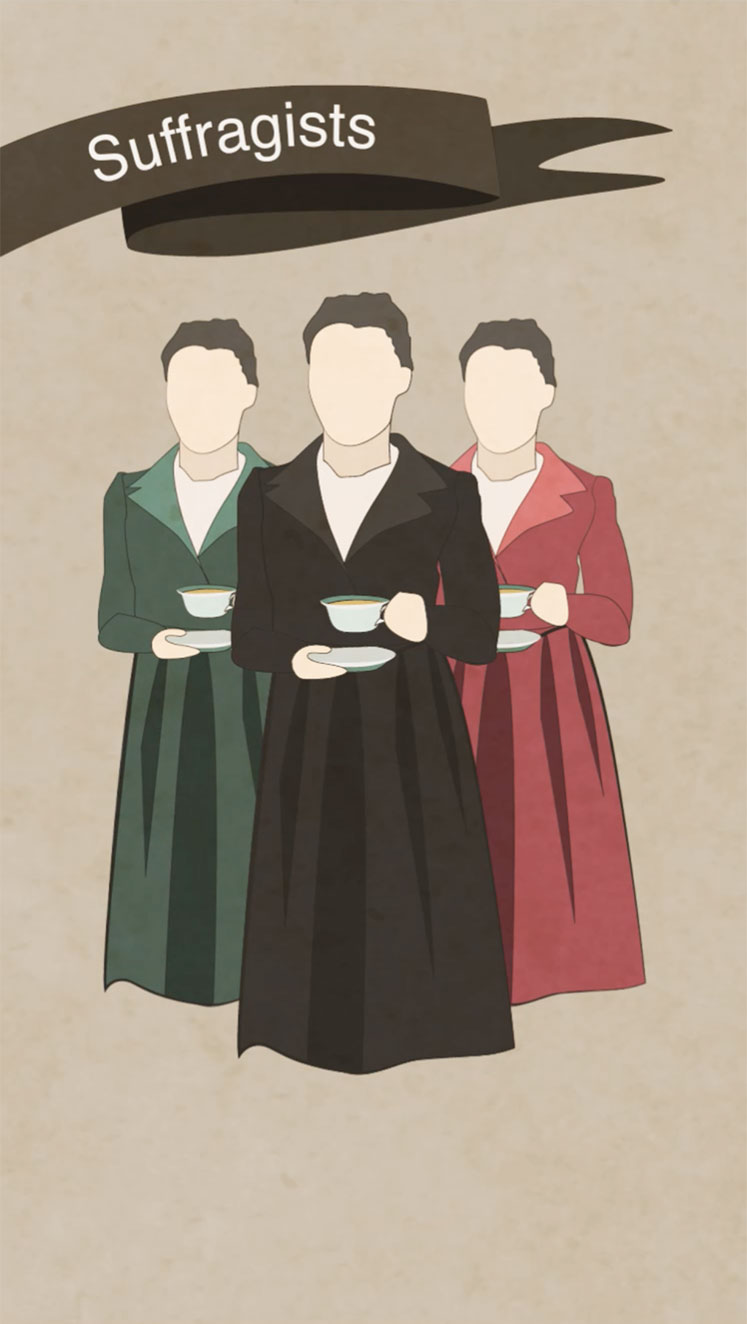
Suffragists – dinner parties!
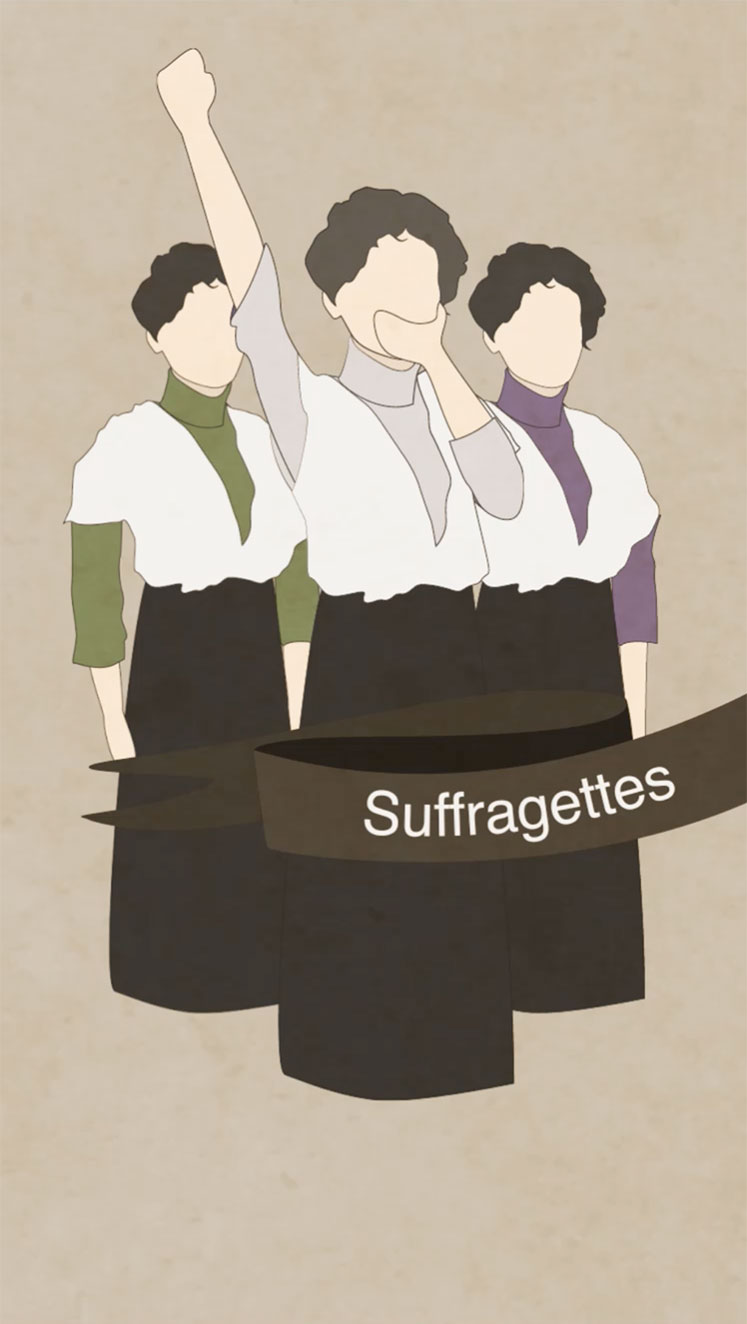
Suffragettes – hunger strikes!
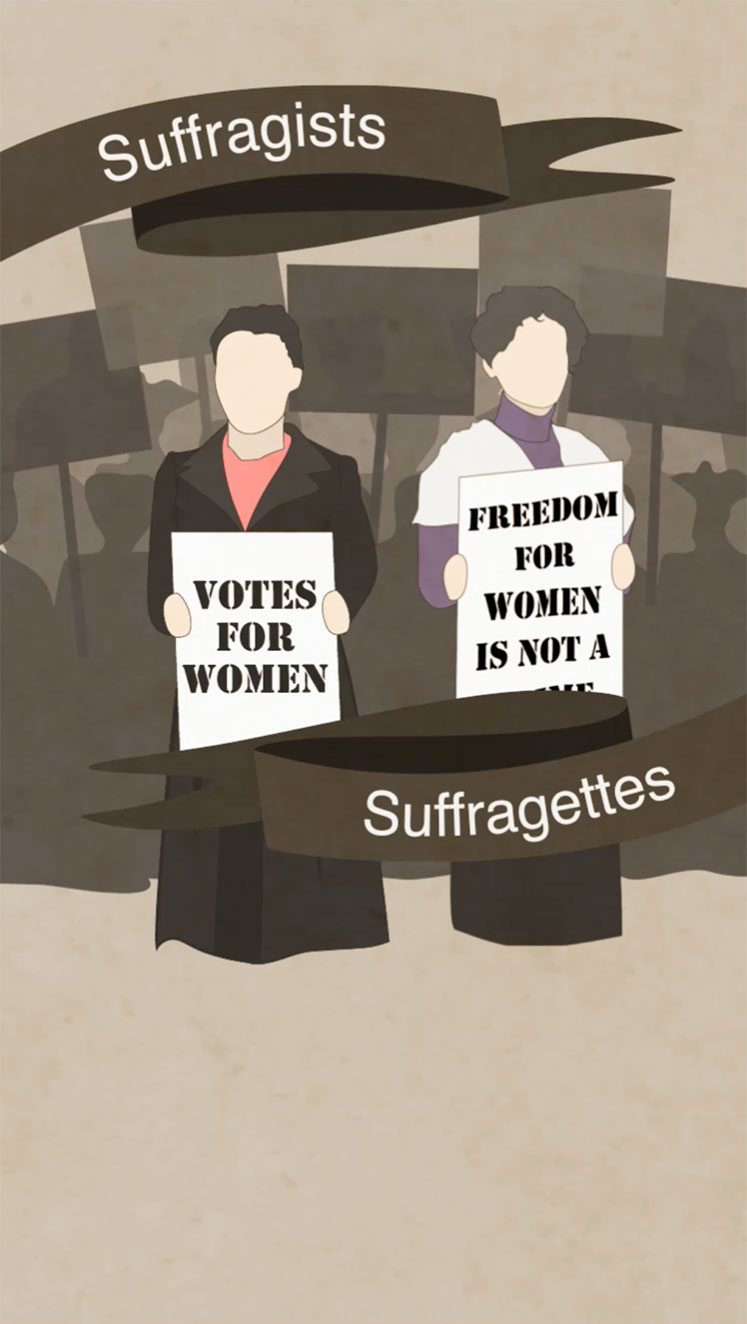
Everyone organised marches!
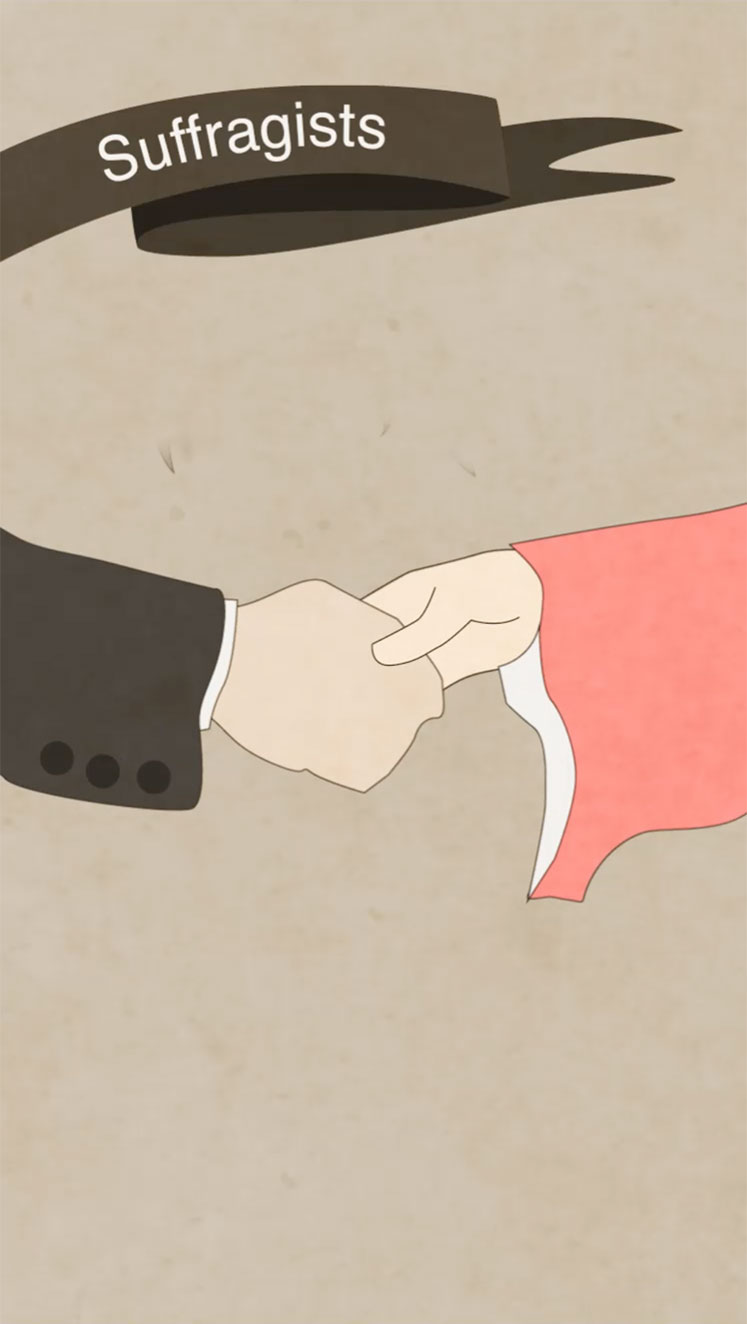
Suffragists – successfully congenital support in parliament over many years
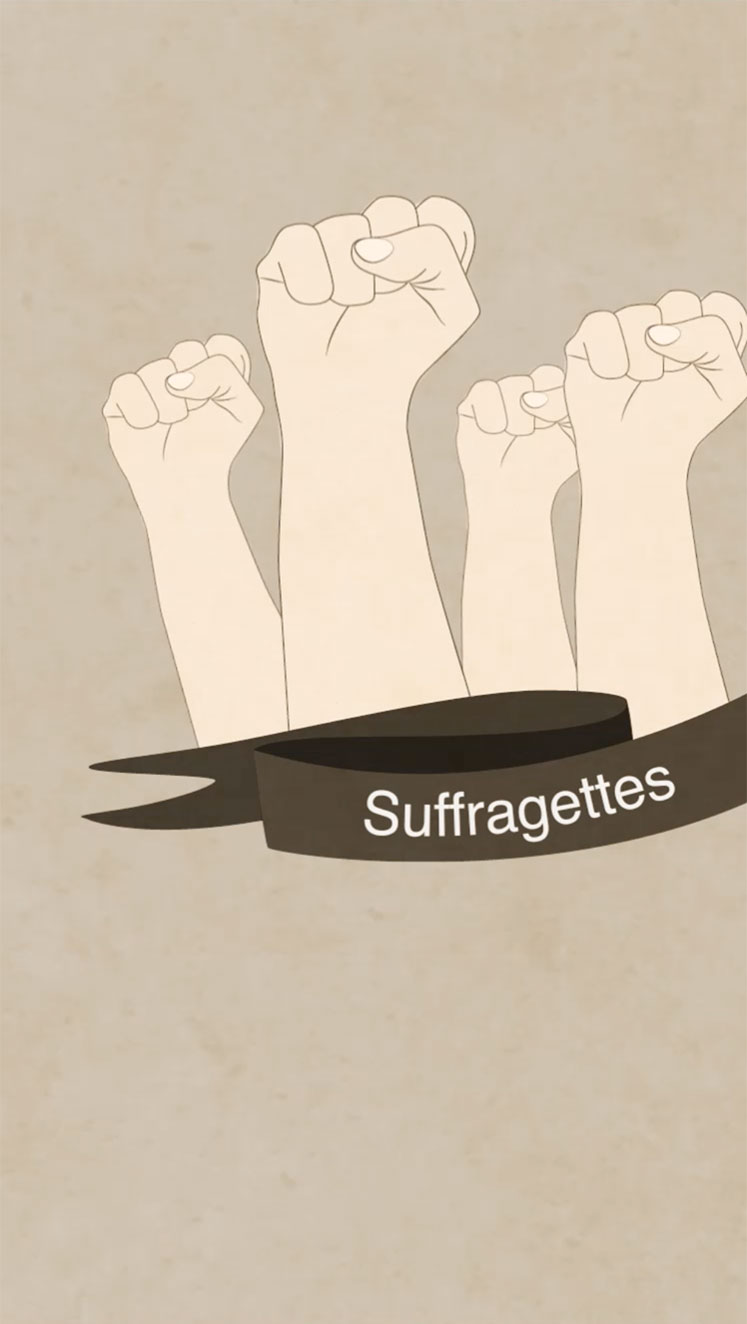
Suffragettes – increased publicity and re-energised the cause but also sparked a backfire
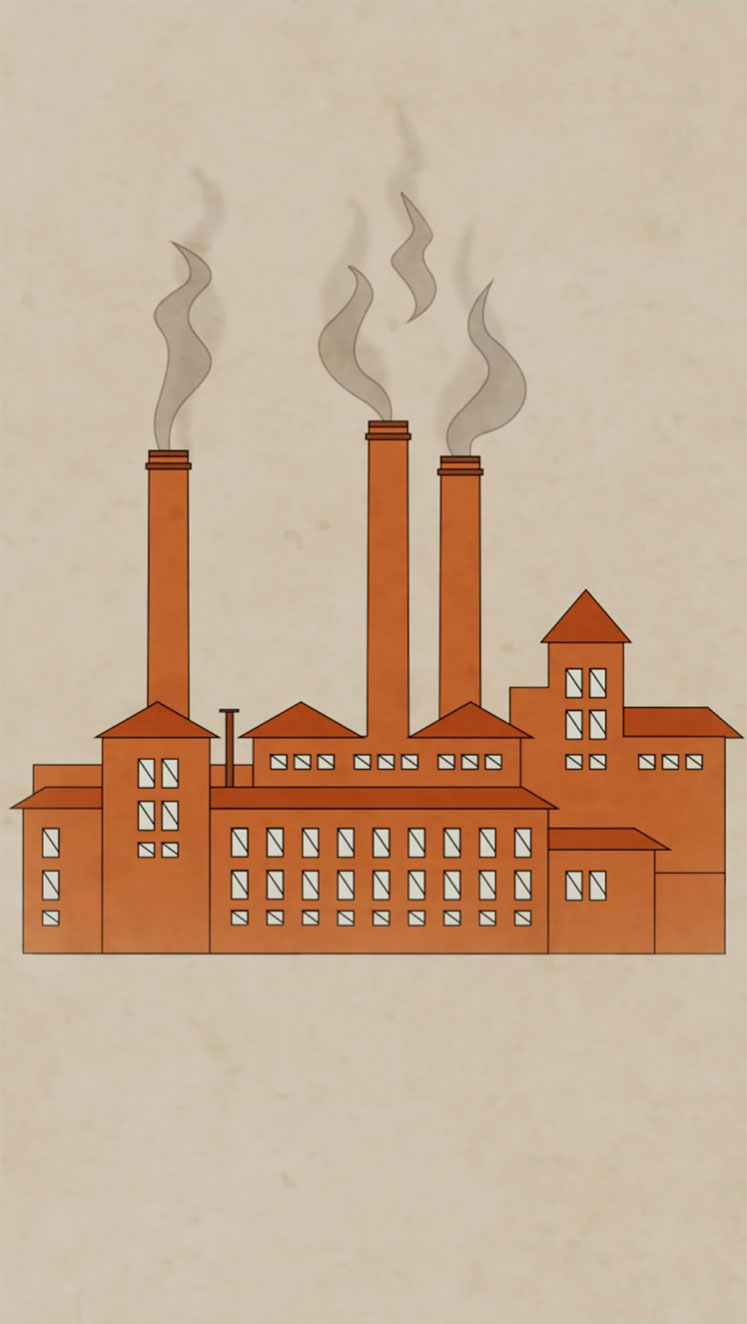
Then in World State of war One, women took new roles in factories and beyond...
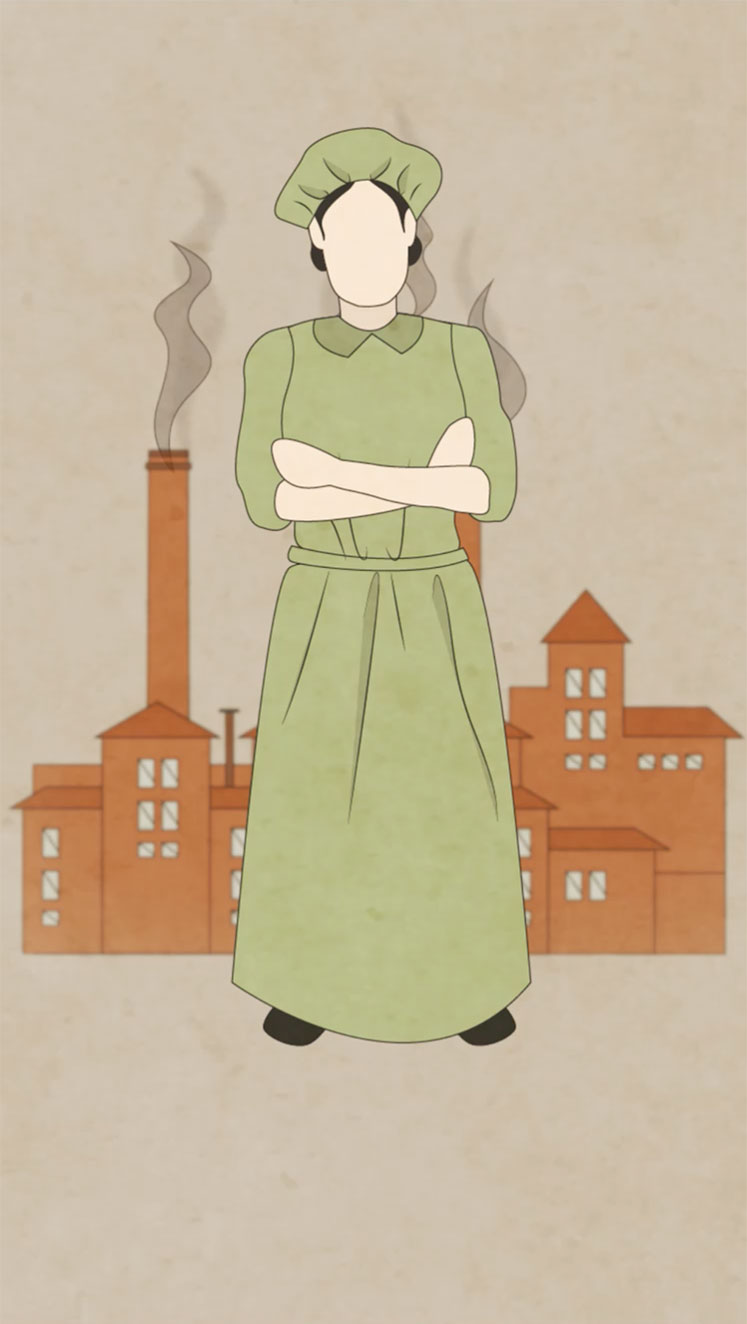
...which fabricated denying them voting rights harder than ever
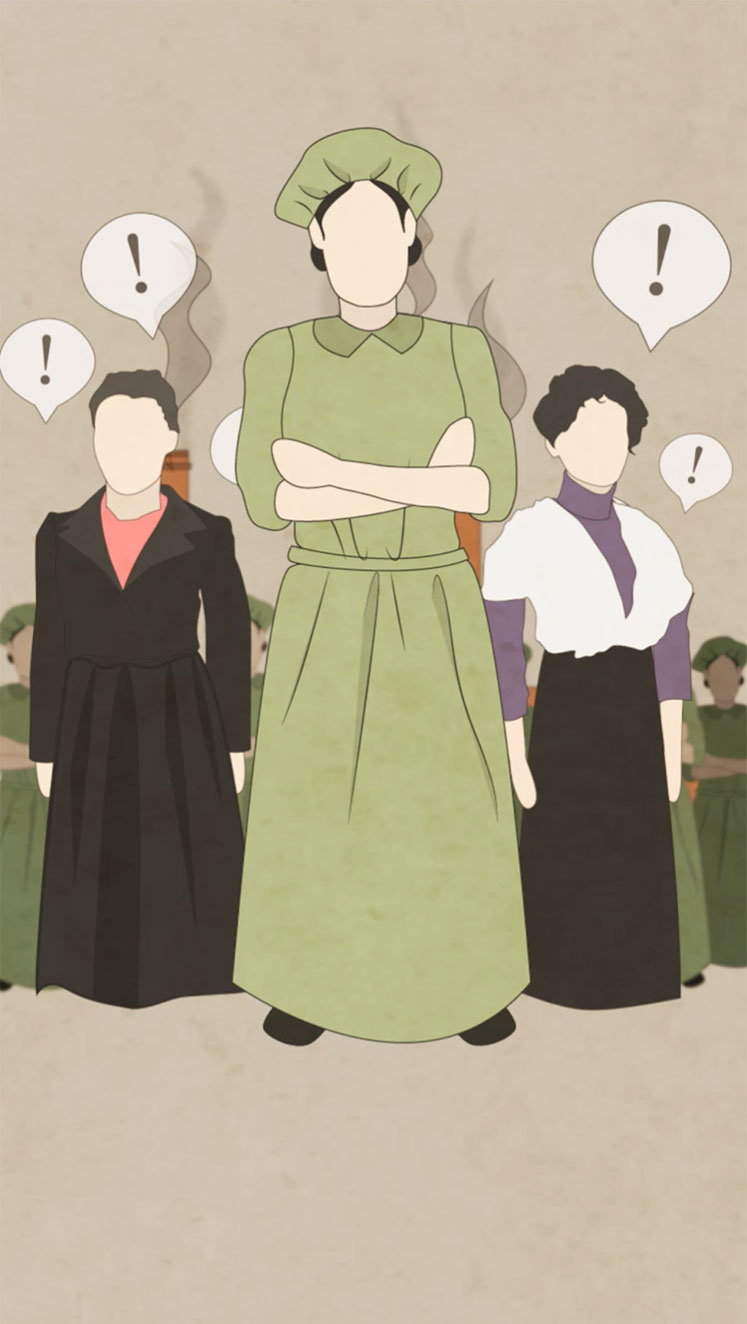
After 50 years of women standing up and speaking out...
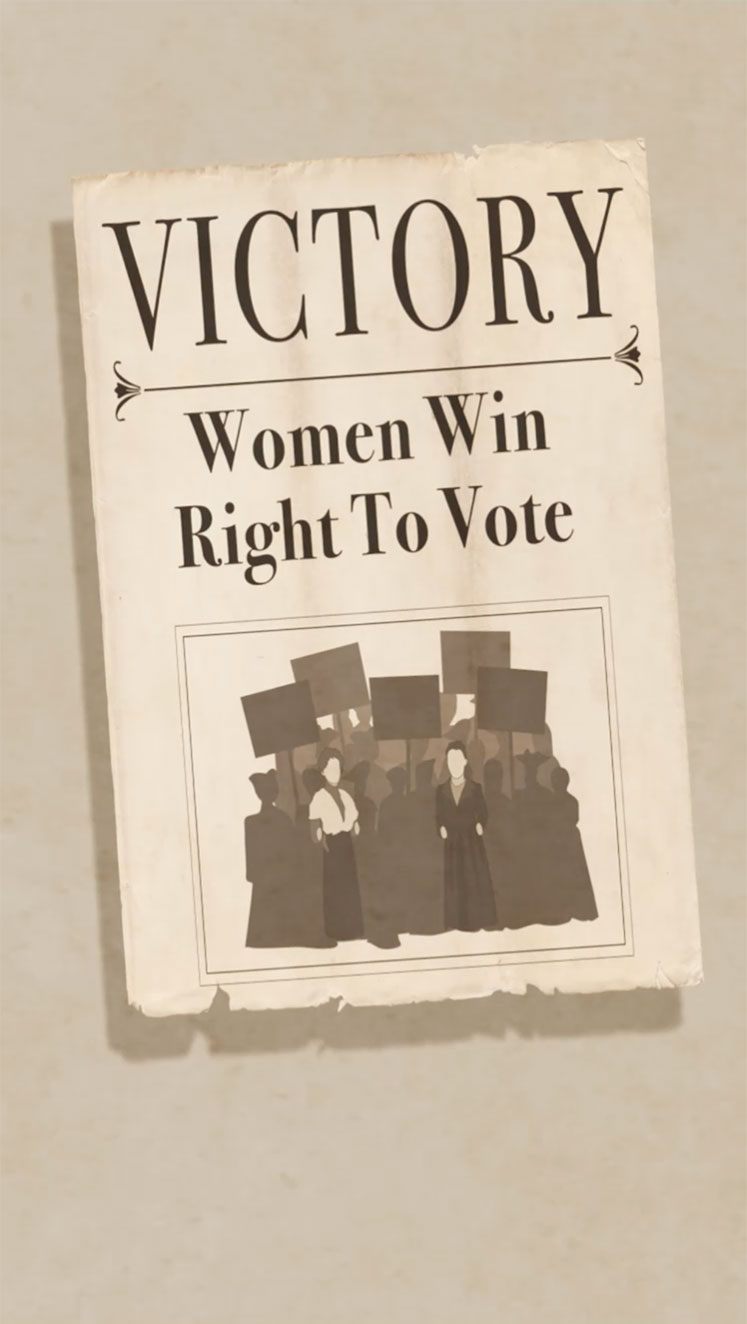
Parliament finally passed a law giving some women the vote in 1918
Prof June Purvis of the University of Portsmouth has collected many postcards printed with anti-suffrage messages and imagery.
"I was quite fascinated by these postcards because non many people have done research on them, and I thought they were telling a message of how difficult it was for women at that time to be taken seriously," she says.
A number of the examples in her collection still have original writing on the back, many of which don't explicitly refer to the prototype on the front.
"In the early on 20th century postcards were big business," says Prof Purvis.
"I think the people who bought them were sending a normal message [for example arranging to run into upwardly], like how we at present utilize email."
Image source, Prof June Purvis
For Prof Purvis, one of the stand-out postcards shows a grouping of women, supposedly in the House of Commons, showing what a future with women in Parliament would be like.
In the epitome, one woman is staring into a mitt mirror, while some other reads a volume in the corner and yet another has brought her baby with her.
"That postcard really portrays the cultural fearfulness at the time, that if women got the vote, they may then ask to be immune to stand for Parliament and this is going to upset the whole gender order."
In Nov 1918 women were granted the right to correspond ballot for the beginning fourth dimension.
What is 100 women?
BBC 100 Women names 100 influential and inspirational women around the world every year and shares their stories. Notice u.s. on Facebook, Instagram and Twitter and use #100Women
Other stories you lot might like:
More than on this story
Source: https://www.bbc.co.uk/news/uk-42704341
0 Response to "what were the arguments in not giving women the right to vote?"
Post a Comment